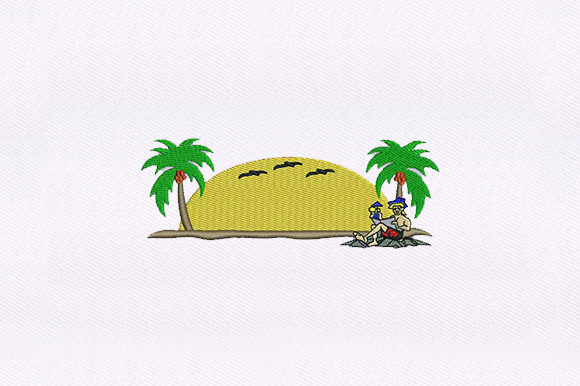
Reviewing Guy on the Beach for Business Merch
As an embroidery designer who has spent years digitizing and testing files for commercial use, I approach every new machine embroidery design with a critical eye. It is not just about whether a motif looks cute on a screen; it is about how it performs in the real world of small business merchandise. Today, I am reviewing Guy on the Beach, a design that promises to be a high-quality addition to your sewing projects. For boutique owners, Etsy sellers, and apparel decorators, understanding the practical application of this file is crucial before you commit to production runs.
First Impressions and Visual Personality
The title Guy on the Beach immediately evokes a sense of leisure, warmth, and coastal charm. In the context of brand identity, this suggests a visual personality that is friendly, relaxed, and approachable. For businesses in the hospitality, tourism, or lifestyle sectors, this vibe is invaluable. When I evaluate a new digital embroidery file, I look for clarity and intent. Does the design communicate its theme instantly? Based on the description, this lovely embroidery is designed to look great on any fabric, which implies a versatile stitch structure that avoids excessive complexity that might get lost on textured materials.
For a handmade brand or a creative studio, the aesthetic needs to feel premium yet accessible. If Guy on the Beach leans into a playful or rustic style, it becomes an excellent candidate for customer gifts or event merch. However, if the lines are too intricate, it may lose its impact when scaled down. My initial assessment focuses on whether the design maintains its integrity across different applications, from a large back patch to a subtle chest logo accent.
Real-World Applications for Small Business Merch
The true test of any embroidery file is its versatility in commercial embroidery projects. Let us break down how Guy on the Beach can serve various business needs.
- Embroidered Patches: This is perhaps the most lucrative application. A well-digitized beach-themed character makes for a compelling iron-on or sew-on patch. These can be sold as standalone products or used to upgrade plain denim jackets and canvas bags. The key here is ensuring the edges are clean and the satin stitches are dense enough to prevent fraying.
- Staff Uniforms and Aprons: For cafes, bakeries, or florists with a coastal or summer theme, this design could work beautifully on apron embroidery. It adds a touch of personality to staff uniforms without being overly corporate. However, placement is critical. A smaller version on the chest pocket area often looks more professional than a large central design.
- Cap Embroidery: Caps are a staple of small business merch. If the design fits within a standard 2.5-inch width, it can serve as a striking front-panel logo. The curved surface of a cap requires careful digitizing to avoid distortion. If Guy on the Beach has wide horizontal elements, it may need adjustment to sit correctly on the crown.
- Tote Bag Design: Canvas tote bags are popular among eco-conscious brands. A medium-sized embroidery on a tote adds perceived value, transforming a simple bag into a branded accessory. The texture of canvas requires a robust stabilizer to prevent puckering, especially if the stitch density is high.
Navigating Technical Challenges and Fabric Constraints
While the description states that this machine embroidery design will look great on any fabric, experienced designers know that "any fabric" requires different preparations. You must consider where the design should be used carefully to avoid production errors.
Stitch Density and Fabric Texture: If Guy on the Beach features heavy fill areas, it may pull on lightweight fabrics like linen or thin cotton. On textured fabric, such as terry cloth towels or rough canvas, fine details might get lost. Always test the design on the actual material you intend to use. If the design includes tiny lettering or detailed outlines, these elements may not stitch out cleanly on plush or uneven surfaces.
Dark Uniforms and Thread Colors: Contrast is king. If you are stitching on dark navy or black uniforms, ensure the thread colors in the design pop. You may need to adjust the color palette in your embroidery software to maintain visibility. A lack of contrast can make the design look muddy and unprofessional, undermining the brand identity you are trying to build.
Washability and Durability: Items like aprons and work shirts undergo frequent washing. High stitch density can sometimes lead to stiffness or tearing over time if not properly stabilized. Ensure that the finished product can withstand the rigors of daily use without losing its shape or vibrancy.
Impact on Brand Identity and Customer Trust
Consistency in your design assets builds trust. When a customer sees a high-quality embroidered logo on a tote bag or a cap, it signals professionalism and attention to detail. Guy on the Beach can enhance your visual consistency if it aligns with your existing branding. For Etsy sellers, offering items with unique, well-executed embroidery can justify higher price points and increase buyer engagement.
A poorly executed embroidery, however, can damage your reputation. Puckering, thread breaks, or misaligned designs suggest a lack of care. By choosing a high-quality file and testing it thoroughly, you protect your brand image. The tactile nature of embroidery adds a premium feel that printed graphics cannot match, making it a powerful tool for enhancing product value.
Practical Designer Notes for Production
Before you launch your next campaign featuring Guy on the Beach, follow these practical steps to ensure success:
- Test in Black and White: Convert the design to monochrome in your software to check for clarity. If the shapes are indistinguishable without color, the design may be too complex for small sizes.
- Check Scale and Hoop Size: Confirm the hoop size required for the design. Ensure it fits within your machine's capabilities and the intended garment area. Do not assume the file is optimized for all hoop sizes.
- Review Thread Color Contrast: Create a printable mockup using your brand's specific thread colors. This helps visualize the final look before stitching a single thread.
- Use Proper Stabilizer: Match your stabilizer to the fabric. Cut-away stabilizers are generally better for stretchy fabrics, while tear-away works for stable wovens. Incorrect stabilization is the number one cause of poor embroidery quality.
- Verify Commercial Licensing: This is critical. Check the license terms associated with the digital embroidery file. Ensure you have the right to use it for commercial purposes, such as selling finished products or branded merchandise. Never assume a file is free for commercial use unless explicitly stated.
- Inspect Spacing and Jump Stitches: Look for unnecessary jump stitches that can cause thread nests on the back of the garment. Clean up the file if necessary to ensure a neat finish.
In conclusion, Guy on the Beach offers promising potential for small business merch, provided it is handled with technical precision. By understanding its visual personality, testing it across various fabrics, and adhering to best practices in commercial embroidery, you can create standout products that resonate with your customers. Always prioritize quality control and brand consistency to maximize the impact of your embroidery projects.